


Meeting Overview
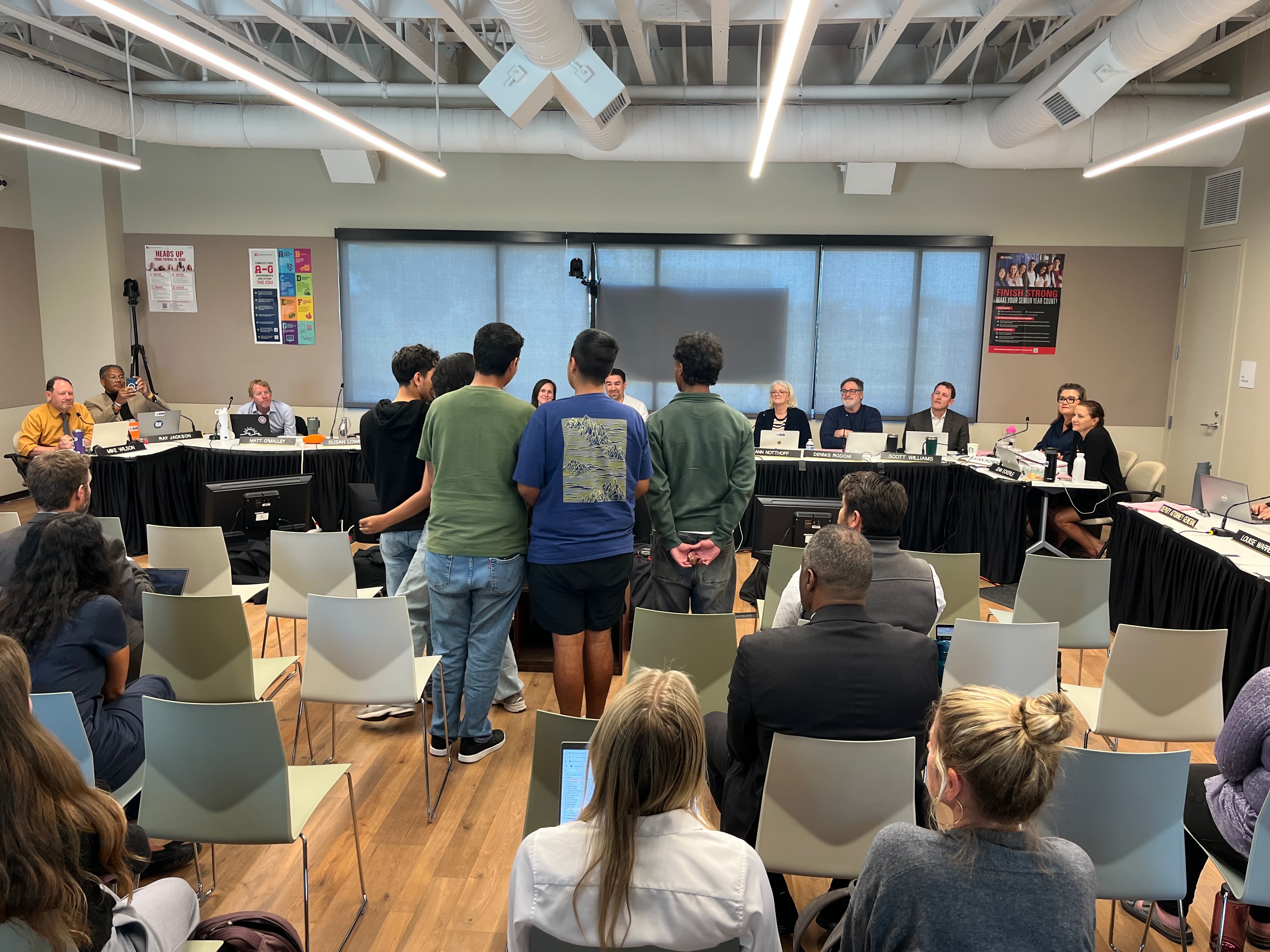
The Commission met from April 15-17 in Gonzales, a small city in the Salinas Valley, 32 miles inland from Monterey. The community welcomed the Commission — fans and detractors alike — at the beautiful new Dennis and Janice Caprara Community Center. Commissioner Lopez, who represents the Salinas Valley in his day job as a Monterey County Supervisor, beamed with pride when the Gonzales Youth Council came before the Commission to share that it was Gonzales youth who conceived and led advocacy to build the very room we were all sitting in. A tip of the hat to Commissioner Lopez and the City of Gonzales for their hospitality, and for a refreshing change of scenery from the usual hotel conference room.
But onto the business of saving the coast. Fireworks didn't go off on Wednesday, because drone shows dominated the agenda items we tracked. The Commission approved SeaWorld San Diego's CDP application to conduct a one-year drone show pilot to determine whether the shows can replace its nightly summertime fireworks, which pollute Mission Bay, harm wildlife, and frustrate local residents and their pets. Later, the Commission denied a Long Beach restaurateur's request for another July 4 fireworks show, after requiring that he switch to drone shows starting in 2026. To close out the show, the Commission approved a drone show at the Santa Monica Pier tied to the World Cup — they knew better than to even ask about exploding fireworks over the ocean.
During Wednesday's Legislative Report, Commissioners voted to officially oppose AB 1740 (Zbur), a statewide Coastal Act exemption bill recently amended to apply only to Santa Monica. They also voted to support AB 2734 (Hart), which would ensure that 100% of Whale Tail license plate revenues go to Commission Whale Tail grants and the Coastal Conservancy's Explore the Coast program.
On Thursday, the Commission approved a key LCP update from the City of Santa Cruz: a new Beaches and Bluffs Hazard Adaptation Chapter for their Land Use Plan. The chapter sets a new standard for coastal hazards planning, especially for cities with a developed coastline. It sets strong protective policies for the City's shoreline, including its surf breaks, and a five-year timeline to produce Shoreline Adaptation Management Plans (SAMPs) for each stretch of coastline, including the imperiled West Cliff Drive.
Five Pro-Coast votes, zero Anti-Coast votes. The April meeting was a big win from the ActCoastal perspective. Spirits are high heading into the May meeting in San Pedro, as we continue to mark the 50th Anniversary of the Coastal Act.
Issues voted on at this meeting:
The Commission unanimously approved a new Beaches and Bluffs Hazards Adaptation Chapter of the City of Santa Cruz's Land Use Plan (LUP), the first update as part of the City's comprehensive LCP update.
The Commission denied a permit amendment request from a Long Beach restaurateur seeking to conduct one final July 4 fireworks show over Alamitos Bay in 2026, after he had specifically agreed to pursue a drone show at his CDP hearing in May 2025. Despite the applicant's pleas and those of his many supporters, Commissioners stood firm, consistent with the regulations governing CDP amendment requests.
The Commission unanimously approved a CDP for SeaWorld to conduct a year-long drone show pilot, testing whether drone shows can replace its nightly summertime fireworks over Mission Bay. Fireworks casings introduce toxic chemicals and plastics directly into Mission Bay, which connects to the ocean.
The Commission voted to support AB 2734 (Hart), which would revise the revenue allocation for Whale Tail license plates to ensure that 100% of proceeds support coastal access, education, and stewardship grants — split evenly between the Commission's Whale Tail Grant program and the Coastal Conservancy's Explore the Coast program.
The Commission voted unanimously to oppose AB 1740, the latest bill exempting various types of development from the Coastal Act and therefore jeopardizing public access and coastal resource protections.
Other Discussions
As part of the Commission's ongoing celebration of the Coastal Act's 50th anniversary, Director Huckelbridge's monthly reports feature both a program spotlight and a public access presentation. This month's were worth the time.
Enforcement Spotlight: SoCal
This month’s program highlight: Enforcement, SoCal edition. Enforcement Manager Andrew Willis focused specifically on public access enforcement actions, while noting that the program also focuses on protecting coastal wildlife habitats, views, and other key resources. He highlighted Commission action to resolve violations and improve public access in Laguna Beach, Carlsbad, Dana Point, Malibu, Newport Beach, Palos Verdes, Huntington Beach, and Santa Monica. If you have the time, this presentation is worth watching.
Public Access Spotlight
The report featured two public access highlights: the Monterey Coastal Recreation Trail and a pair of connected trails in Santa Cruz. Both deserve celebration, but the Monterey trail deserves special recognition as a testament to the Commission's public access work. The trail is a defining feature of Monterey, spanning 18 miles from Castroville to Pacific Grove, and offering direct access to Cannery Row, Fisherman's Wharf, and the Monterey Aquarium. The trail follows a former Southern Pacific railroad route that, without Commission intervention, would not exist as a public trail today. The video below, featuring Commission Legislative Director Sarah Christie, tells the story of this little-known Commission achievement.
Santa Cruz's Coastal Campus and De Anza Trails are also worth celebrating — check out this Commission Instagram post and give it a like. There's a Spanish version too.
April Report Now Live
The Commission met from April 15-17 in Gonzales, a small city in the Salinas Valley, 32 miles inland from Monterey. With five Pro-Coast votes, the meeting was a big win from the ActCoastal perspective. The Commission supported drone shows as a less environmentally damaging alternative to fireworks over coastal waters, took a stance on key legislation affecting the Coastal Act, and approved a gold standard coastal hazards LCP Update from the City of Santa Cruz.