


Meeting Overview
The Commission met in Oceanside October 7-9 and tackled a busy agenda that included the fallout from last month’s Hurricane Marie swells. Wednesday’s Orange County Deputy Director’s Report contained more than 30 emergency permits for coastal armoring. Most were for properties on Beach Road in Dana Point, where the Commission and property owners have been at odds over resilience planning for years. In San Clemente, up to 15,000 more tons of boulders were approved to protect the rail corridor, where 27,000 tons of previously placed emergency rock is already failing and a large stretch of public beach has been lost as a result.
Twenty-two people commented in opposition to OCTA’s continued emergency armoring and the loss of public beach that has come with it. Together, the comments made a clear case: armoring is failing to protect the tracks while destroying the beach, and sand on the beach is the only way to protect the rail in the near term. Surfrider joined the chorus, also questioning whether the rail corridor will last through the winter, let alone the 30 years OCTA has planned for. The follow-up CDP for all of OCTA's emergency armoring since 2021, as well as additional armoring requests, will come before the Commission at the November meeting. A recent Surfrider blog post details the damage done, and provides recommendations for a better way forward.
A viral post shows how perilous the rail has become
Emergency permits are issued by staff without a vote, but Commissioners still expressed concern and engaged with Executive Director Huckelbridge on the issue. Commissioner Escalante worried that too many coastal communities don’t understand beach dynamics, and decried years of vehement local pushback against long-term adaptation planning that has led to this onslaught of emergency permits. She fears the Commission will eventually buckle under the weight of emergency requests as sea levels rise. Commissioner Jackson asked “what’s really an emergency” when the problem is foreseeable and has been studied for years.
Thursday’s main event was the City of Carlsbad’s LCP Update, which included a controversial rezone of Planning Area F at Ponto, one of two remaining undeveloped coastal parcels where coastal recreation could relocate as sea levels rise. More than 90 people signed up to speak, all but one in opposition. Carlsbad residents have long sought a coastal park there, but the land is privately owned and the City has never attempted to acquire it. Surfrider supported keeping the site in low-intensity use to preserve options for realigning Carlsbad Boulevard and relocating the South Carlsbad State Beach campground, the City’s largest source of lower-cost overnight accommodations. The Commission majority, strongly supportive of housing in the coastal zone, approved the update, including the rezone to allow 120 rental homes with 24 affordable units. Four Commissioners voted no. The core failure was at the City level, where neither City staff nor a Council majority ever pursued acquiring the site for public use.
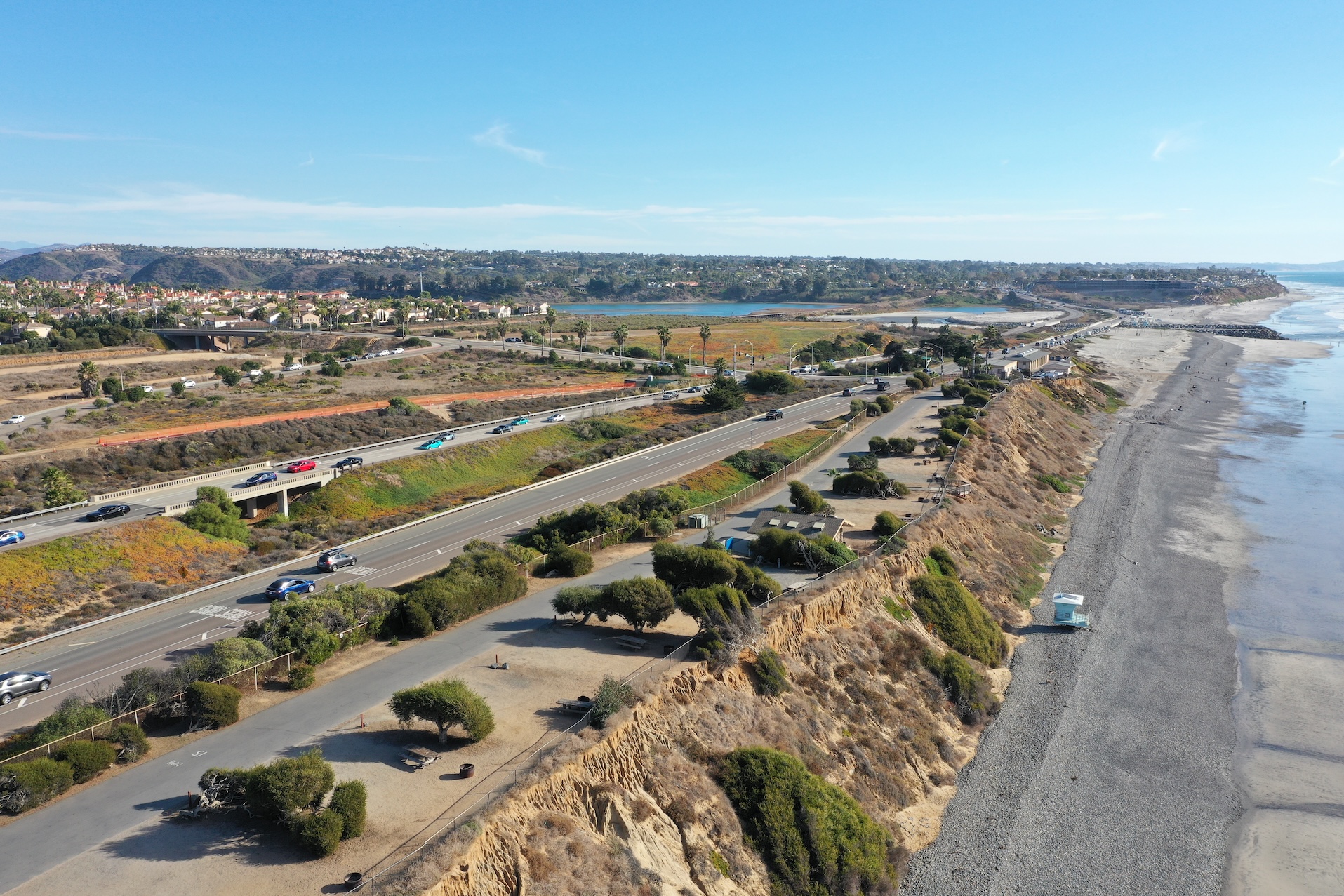
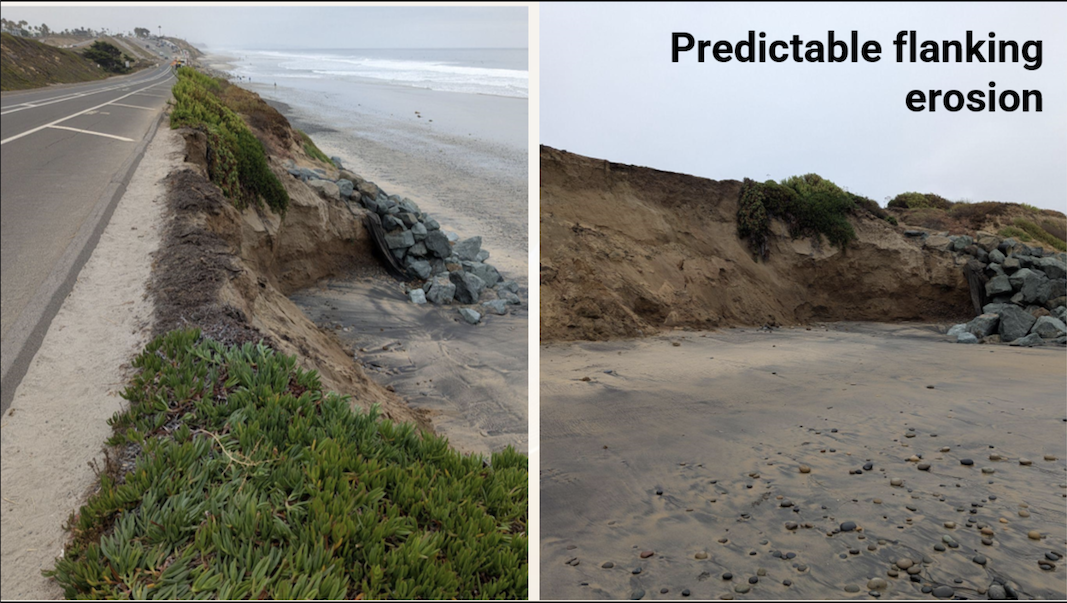
Surfrider also weighed in on a separate Carlsbad emergency armoring permit, where the City has studied a viable managed retreat option but hasn’t yet mustered the political will to commit. Instead, they've relied on multiple rounds of emergency boulders to protect a road that can be moved. Surfrider’s San Diego Chapter has been a vocal cheerleader for prioritizing the project, supporting the City’s early progress while leaning on the Commission to hold the City to its commitments. When the City formalized its first round of emergency armoring in 2018, it agreed to follow up with a long-term hazards management plan that preserves the beach and public access to it. The City has twice sought to extend that deadline, most recently in July, and Surfrider correctly predicted it would be back for more emergency armoring soon.
The Commission also approved culverts under the railroad in San Clemente, which should let some bluff sediment currently blocked by the tracks reach the beach. Surfrider and Save Our Beaches San Clemente submitted several rounds of comments asking for stronger conditions and better protections for public access.
On Friday, the Commission approved a solid Phase 1 LCP Update from Pismo Beach. Like Carlsbad, the City deferred its sea level rise and coastal hazards policies to a later phase. But unlike Carlsbad, Pismo’s update strengthened protections for open space (e.g., beaches) without a controversial rezone that would shut the door on future coastal adaptation. The Commissioners earned a Pro-Coast vote.
Issues voted on at this meeting:
Other Discussions
Carlsbad LCP Update
The Commission voted 7-4 to approve, with modifications, a major update to Carlsbad’s LCP, including a complete overhaul of its 1996 Land Use Plan (LUP) and revisions to two master plan areas. The new LUP sets strong rules for individual projects, including limiting seawall eligibility to structures built before 1977, requiring permitted seawalls to be reviewed every 20 years, prohibiting armoring for new development, and protecting lower-cost overnight accommodations.
However, it defers citywide sea level rise adaptation planning to 2034, the latest date state law allows, even though the City completed an adequate Sea Level Rise Vulnerability Assessment in 2017. Surfrider expressed concern over the missed opportunity to set affirmative policies for the landward realignment of Carlsbad Blvd, which will create space for beaches and visitor-serving accommodations like a popular campground to adapt to sea level rise. The LUP only commits to “considering” and “evaluating” these opportunities.
Meanwhile, the Poinsettia Shores Master Plan Update rezones one of two remaining undeveloped coastal parcels to residential and commercial use, all but foreclosing relocation of the campground or the road there. Carlsbad residents turned out in force for a coastal park they have sought for decades without City support. Commission and City staff negotiated a small buffer for sea level rise on the site, but it is nowhere near enough for road or campground relocation.